How to Fish and Tie the Murray's Hellgrammite
Mastering Smallmouth Bass with the Murray’s Hellgrammite - How to Fish and Tie it
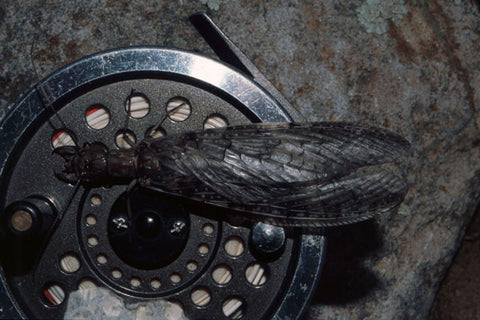 Dobsonfly - Adult form of Hellgrammite Larva
 An example of the natural hellgrammites found on the rivers.
Mastering Smallmouth Bass with the Murray’s Hellgrammite
The smallmouth bass in many rivers consume more natural hellgrammites than any other single food source. The reason is simple: in many river ecosystems, there are more hellgrammites than any other natural prey.
The Secret of the Shenandoah: Why Hellgrammites Work
Growing up on the North Fork of the Shenandoah River in Edinburg, Virginia, the hellgrammite was my favorite bait. A few minutes of seining with an old window screen provided enough dobsonfly larvae to fish all day. Not only did I catch high numbers of smallmouths, but I consistently landed the largest bass in the river.

When you float the Shenandoah River in late summer, you’ll see white "paint splats" on tree leaves—these are Dobsonfly eggs, the beginning of the hellgrammite lifecycle.
The Evolution of a Better Hellgrammite Fly Pattern
After college, I transitioned to fly fishing and sought the perfect hellgrammite fly pattern. I tried masterful-looking flies from legendary shops like Abercrombie and Fitch, but they failed to produce. Even giant stonefly nymph patterns from Montana fell short.
Why Most Hellgrammite Patterns Fail
Through underwater observation, I discovered the problem: Action.
The Real Thing: Natural hellgrammites swim downstream with a pronounced undulating motion.
The Imitations: Most flies had a rigid, "surfboard" posture with no life.
The breakthrough came when Pennsylvania fly tyer Ron Kommer used ostrich herl for musky streamers. Unlike marabou, which collapses in fast current, ostrich herl fibers adhere together and undulate perfectly when wet. By adding a palmered body for the "in-the-round" look and rubber pincers, the Murray’s Hellgrammite was born.
3 Tactics to Fish the Murray’s Hellgrammite
The natural habitat for hellgrammites is beneath cobblestones in riffles and well-aerated runs. Here are the three best ways to fish this fly:
1. The Across and Downstream "Crawl"
This is the most effective tactic for catching trophy bass in our On-the-Stream Fly Fishing Schools.
-
The Method: Cast across the stream below a riffle and "crawl" the fly slowly across the bottom.
-
The Advantage: You can easily feel the strike and maintain a high hook-up rate.
2. Upstream Dead Drifting
If you need to get deeper without a sink-tip line, switch to fishing and wading upstream.
-
The Method: Cast upstream and use a strike indicator.
-
The Key: You must detect the strike instantly; a bass will eject a fly in about one tenth of a second. Keep a tight line and strip at the same rate as the current speed.
3. The "Swing Nymphing" Tactic
Used for deep or heavy water where other methods can't reach the bottom.
-
The Method: Cast at a 45-degree angle up and across. Allow the nymph to sink to the bottom. Once deep, swing the rod downstream at the same rate as the drift.
-
The Result: This allows you to run your flies deeper than any other method using a floating line
We cover these tactics in depth in the two part article "Nymph Fishing Strategies" on our Blog - The View from Harry's Window
Learn to Tie and Fish the Murray's Hellgrammite with Murray’s Fly Shop
The Murray’s Hellgrammite has been our most productive smallmouth fly for over forty years (and a "secret weapon" for big brown trout in Western rivers).
Ready to improve your fly fishing game?
-
Shop: Get the Original Murray’s Hellgrammite or the Heavy Hellgrammite with weighted eyes.
-
Learn: Join one of our Smallmouth Bass Schools or Fly Tying Workshops to master these techniques in person!

The original Murray's Hellgrammite, shown here, later inspired the Murray's Heavy Hellgrammite with weighted eyes for greater depth.
Murray’s Hellgrammite Fly Tying Recipe & Materials
Whether you are tying the Original Murray’s Hellgrammite or the Weighted Heavy version, using the right materials is essential for achieving that lifelike, undulating action in the current. This is available as a Fly Tying Kit or you can gather the materials from the list below.
Tying Materials List
Fly Tying Tip: Tying the Murray's Hellgrammite Bass Fly - Murray's Fly Shop from Murray's Fly Shop on Vimeo.
Fly Tying Steps: for the Murray's Hellgrammite Fly
- Place the hook in the vise. Cover the hook shank with thread and coat it with cement. Choose strong ostrich herl for the extended rear body and break off the weak tips between your thumb nail and your index finger. (About twenty is correct for a size 6 hook.) Tie the ostrich herl over the bend of the hook so the tips extend to the rear about twice the length of the hook shank.
- Tie in the lead free eyes about one-fourth of an inch behind the hook eye.
- Tie the hackle in by the tip over the bend of the hook. Tie the chenille in over the bend of the hook. Advance the thread to the hook eye.
- Tie in the rubber pincers about one-eighth of an inch behind the eye so they spread to the right and left of the hook shank at about a ninety degree angle to each other. Figure eight the thread over the pincers to lock them in place.
- Wind the chenille forward to hook eye and tie off and cut off.
- Palmer the hackle forward in five or six neatly spaced wraps and tie off in front of the chenille. Trim off extra chenille. Whip finish. Coat knot with cement.
Written by Harry Murray at Murray's Fly Shop in Edinburg, VA. For more information visit our website at www.murraysflyshop.com
Fishing Report
View all-

Smallmouth Bass Streams Fly Fishing Report - Ap...
The North and South Fork of the Shenandoah River are currently clear and fishable. Water levels are good. Water temperatures have been around high 50's to low 60's. We are...
Smallmouth Bass Streams Fly Fishing Report - Ap...
The North and South Fork of the Shenandoah River are currently clear and fishable. Water levels are good. Water temperatures have been around high 50's to low 60's. We are...
-

Trout Streams Fly Fishing Report - April 1, 2026
The native brook trout streams in the Shenandoah National Park are doing well. We are seeing Quill Gordons and Caddisflies on the streams. The Blue Quills will be starting very...
Trout Streams Fly Fishing Report - April 1, 2026
The native brook trout streams in the Shenandoah National Park are doing well. We are seeing Quill Gordons and Caddisflies on the streams. The Blue Quills will be starting very...
-

Smallmouth Bass Streams Fly Fishing Report - Ma...
The North Fork of the Shenandoah River looked absolutely tempting as I crossed over it this morning. Water levels are ideal and clarity is good. There are access spots from...
Smallmouth Bass Streams Fly Fishing Report - Ma...
The North Fork of the Shenandoah River looked absolutely tempting as I crossed over it this morning. Water levels are ideal and clarity is good. There are access spots from...


-
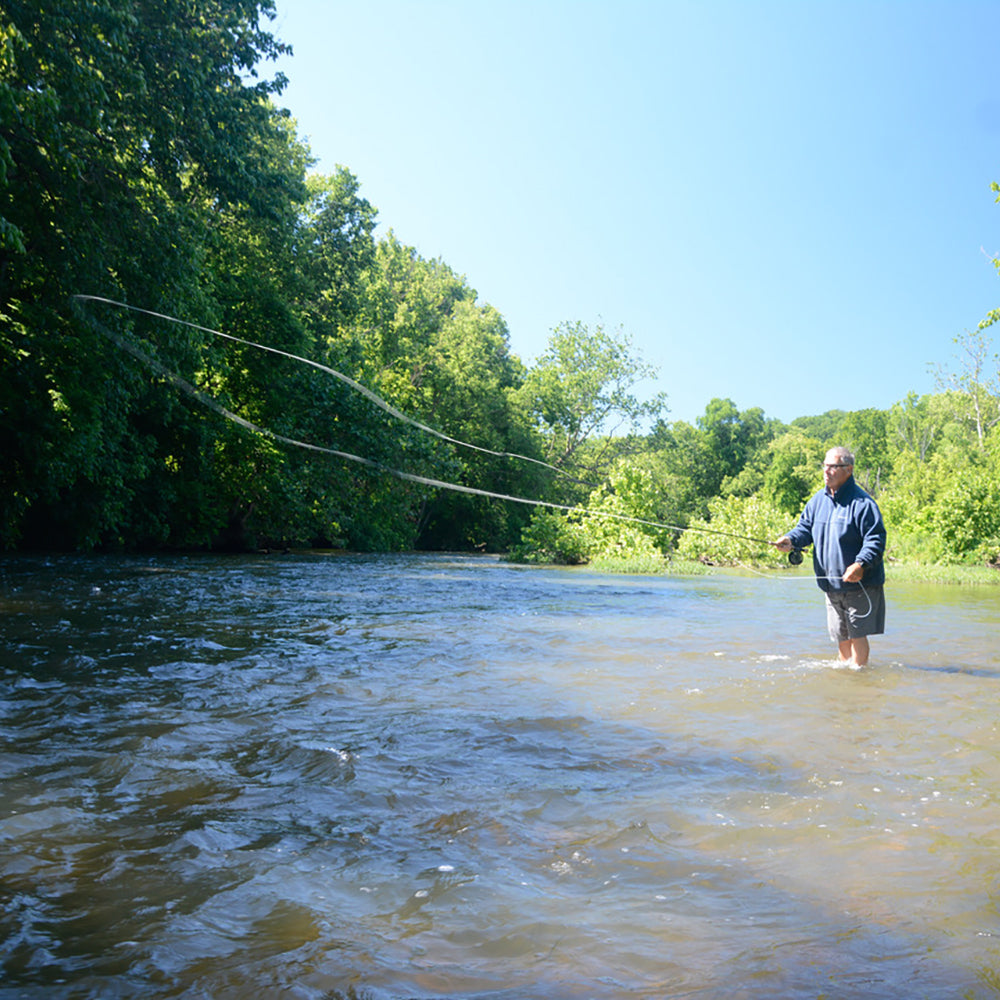
Learn Fly Fishing at Murray’s Fly Shop: Classes, Workshops & Schools
Welcome to Murray’s Fly Shop – Your Fly Fishing Learning Hub At...
-
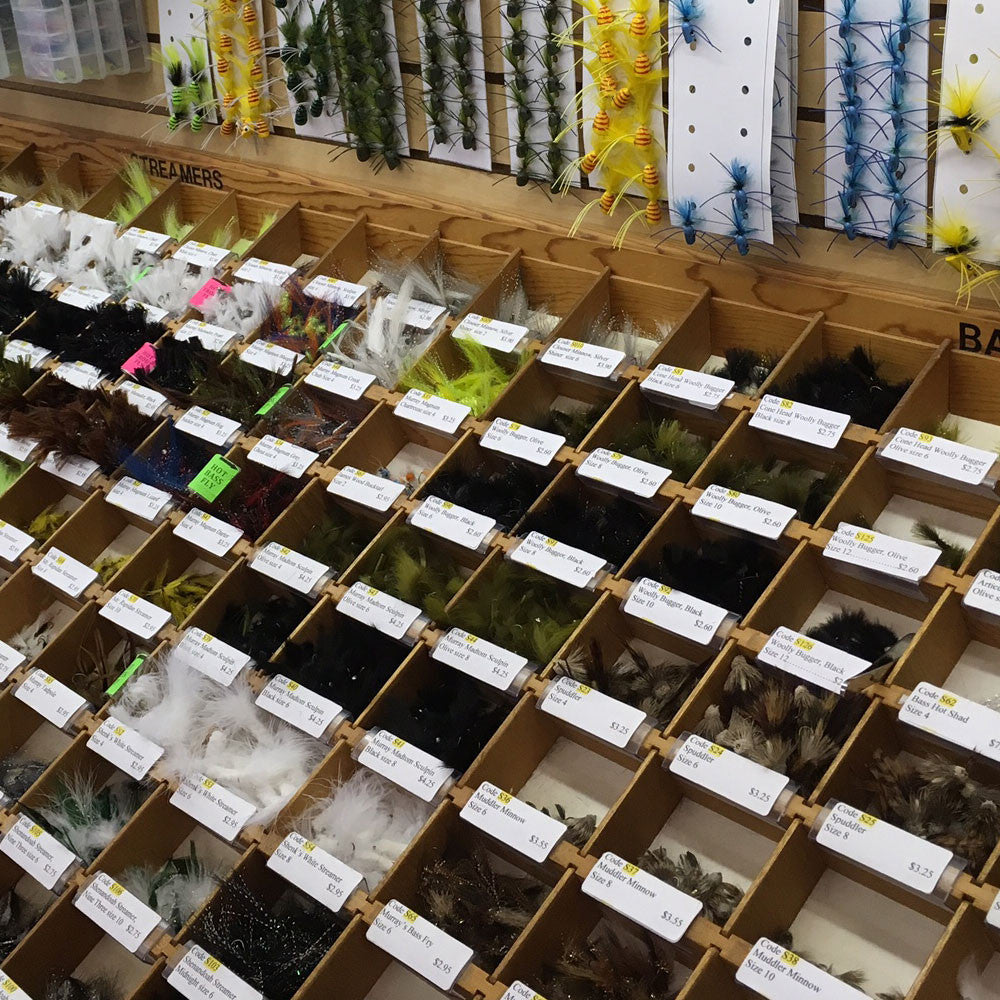
Featured Flies of the Month
Murray's Fly Shop recommended fly list for this time of the year. ...
-
Fly Fishing Rod Outfits
Fly Fishing Rod and Reel Outfits for Smallmouth Bass fly fishing, Trout...
Featured collection
-
Murray's Sport Tek Long Sleeve Shirts
Regular price From $29.00 USDRegular price$29.00 USDSale price From $29.00 USD -
Murray's Trucker Hat
Regular price $25.95 USDRegular price$25.95 USDSale price $25.95 USD -
Murray's Brook Trout T-Shirt--CLOSEOUT
Regular price From $17.00 USDRegular price$19.95 USDSale price From $17.00 USDSale -
MFS Waxed Cotton Hat
Regular price $25.50 USDRegular price$25.50 USDSale price $25.50 USD